
Strategic Update
By Mosaic Staff
September 2024 [Updated in January 2026]
Why This Matters
In the face of the Taliban’s ongoing ban on girls’ secondary education, the Mosaic Global Foundation has successfully completed a one-year pilot programme in Kabul: Alternative Learning Pathway for Adolescent Girls. This initiative was launched to provide a critical educational lifeline to adolescent girls excluded from formal schooling, while also standing firmly against unjust laws that violate the civil, political, and social rights of women and girls in Afghanistan. At its core, the programme affirms Mosaic’s commitment to an inclusive education system rooted in equality, diversity, and pluralism—values that are inseparable from the principles of human rights.
Mosaic’s work is guided by strategic insight from its diverse, inclusive and competent Advisory Board, which includes Dr Mirwais Balkhi, former Minister of Education of the Islamic Republic of Afghanistan (2018–2020), and Dr Zeynep Sungur, whose doctoral research focused on education and nation-building in Afghanistan. Alongside implementation, Mosaic remains active in high-level advocacy events to influence policy. More importantly, in all four iterations of Mosaic’s flagship annual conference series at the University of Cambridge, Cambridge Afghanistan Series (CAS), the issue of education has remained a constant. Mosaic’s other key contributions include “thought leadership,” in the area of education. This includes the recent publication by Executive Chair Zalmai Nishat on the Taliban’s madrasa system and its global implications.
What We Delivered
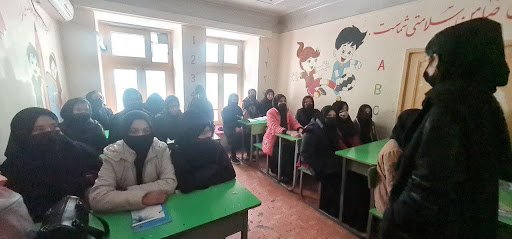
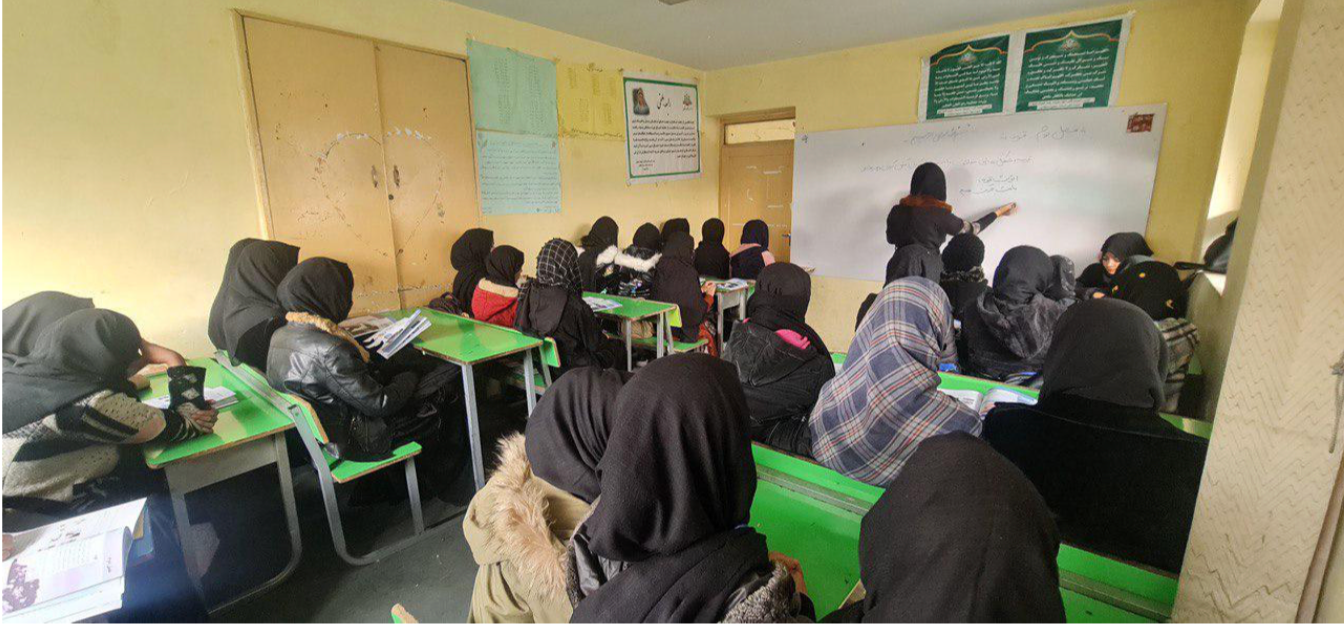
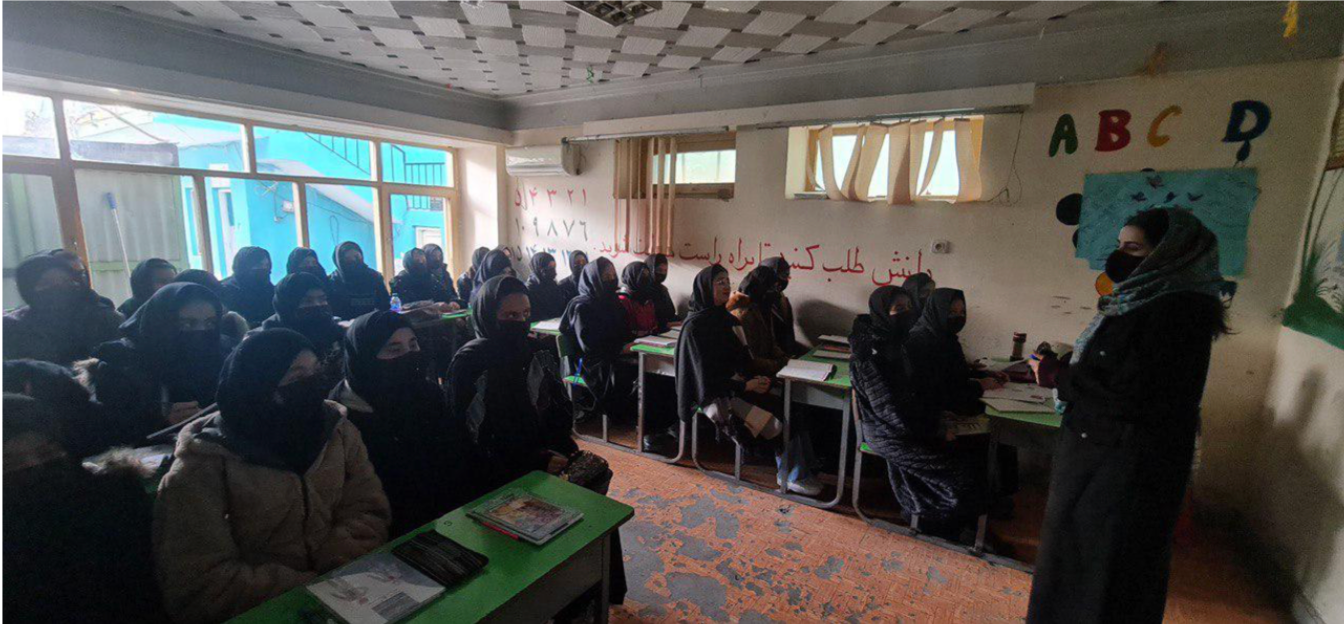
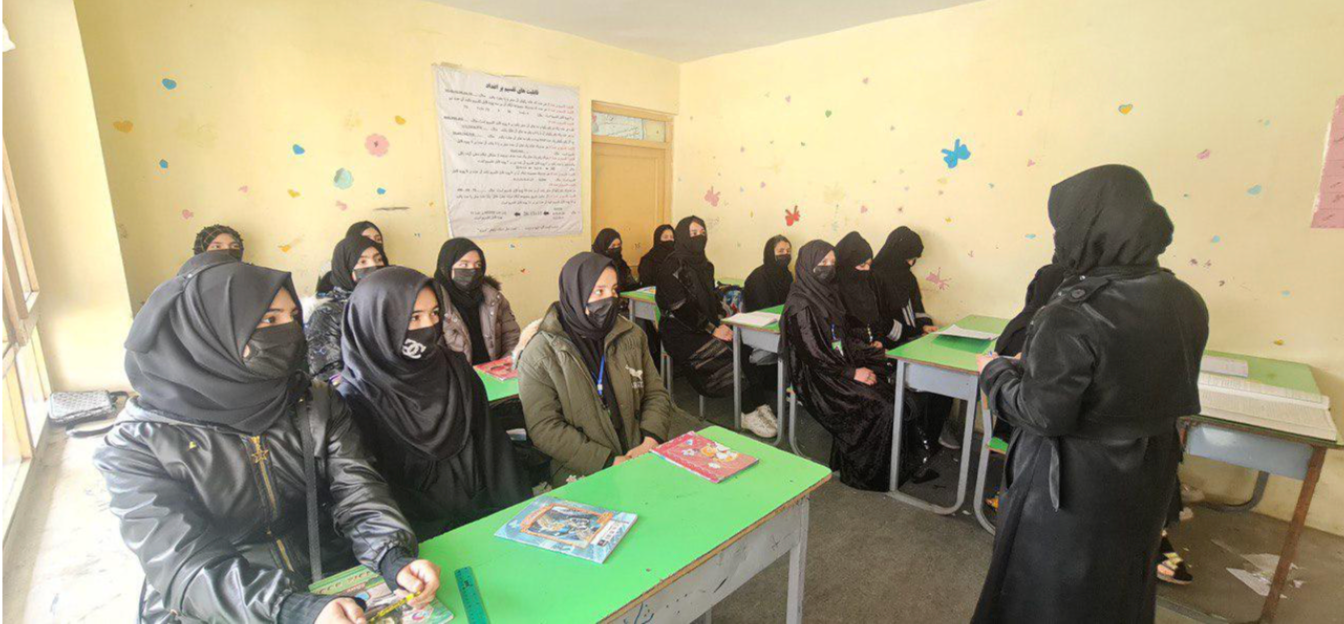
The initiative enrolled 590 girls in grades 7–12, exceeding its original target of 500. Funded by Mosaic’s international donors, delivered in partnership with a local private school under a strict zero-visibility policy to ensure safety and security protocols of those involved, the programme followed the Republic-era national curriculum (2001–2021), with the addition of world history. Despite operating under extreme constraints, 430 students successfully passed their final examinations and were promoted to the next grade—preserving their educational trajectory for a future when schools may reopen.
Following a holistic approach to maximise the impact of the initiative, besides a commitment to empower women by employing over 95 percent of the project staff women as well as offering vocational training to boost women to start small business, the project weaved the component of Youth Dialogue in collaboration with international partners. To foster critical thinking and global citizenship, Mosaic partnered with the Tony Blair Institute’s Generation Global programme. As part of this initiative, over 30 teachers received training in dialogue facilitation, media literacy, and critical thinking, which was then cascaded to hundreds of students. This component empowered girls to engage in cross-border conversations and challenge closed ideologies through reasoned dialogue as well as to understand the harms of fake news and attempts of indoctrination.
Scaling for the Future and Leveraging AI Technology
This pilot serves as a proof of concept for Mosaic’s long-term strategy. We are now committed to scaling this model to reach adolescent girls in additional provinces and underserved rural areas. The pilot project provided the necessary experience to use community embedded strategic intervention, carefully mitigating risks, to other area of the country, including rural areas.
In addition to overcome physical and political barriers to learning, Mosaic is also developing an AI-powered educational application. This tool will deliver personalised, interactive content, ensuring continuity of education even in the most restrictive environments. It reflects our belief in technology as a force multiplier for education in crisis settings.
Moreover, Mosaic is committed to its advocacy efforts through high-level events to influence policy and in the future aims at establishing an international forum to brainstorm on finding effective solutions to the protracted problem of education ban for girls and women in Afghanistan and the risk of radicalisation of the youth in the country. Also, Mosaic will lead in area of thought leadership at the international level.
Empowering Women Through Education & Vocational Training
As hinted above, a defining feature of the initiative was its holistic design. In addition to academic instruction, the programme integrated vocational training in tailoring and embroidery, equipping students and women of the community with practical skills for economic self-sufficiency. Several participants have already launched small businesses, demonstrating the initiative’s tangible impact on livelihoods.
Crucially, over 95% of the project’s staff—from leadership to support roles—were women. This not only ensured a safe and supportive environment for students but also created vital employment and leadership opportunities in a context where women’s economic participation has been severely curtailed.
The programme’s secure and effective operation was made possible by adaptive risk management, strict safety protocols, and the extraordinary courage of the students, teachers, and local partners involved.
Mosaic extends its deepest gratitude to all those who made this achievement possible. We remain steadfast in our mission to defend the right to education and to build a future where every Afghanistani girl can learn, lead, and thrive.
Our conference series have always attracted a lot of media attention, including by the BBC Persian, Afghanistan International, Hashte Subh Daily, Amu TV, and English media like The Jurist etc, among others.
Please find our Girls’ Education project’s “Impact Report” from HERE
Mosaic's Social Media Post from June and July 2024 on the Project:
https://x.com/MosaicGFdn/status/1803020845582868888
https://x.com/MosaicGFdn/status/1807748462764597747
https://x.com/MosaicGFdn/status/1816065087993500159
For further information, contact us at: info@mosaicfoundation.global